


.svg)


Phonak PartnerMic Review: Is It Worth It for Parents of Hard of Hearing Kids?
Our honest review of the Phonak PartnerMic: what it does well, where it falls short, and whether it's worth the price.
An Affordable Entry Into Remote Mic Tech
When our daughter was diagnosed with hearing loss, her team mentioned FM systems as something to consider down the road. We filed it away. Soon afterwards, we were provided with a Phonak PartnerMic as part of a special promotion on her hearing aid order.
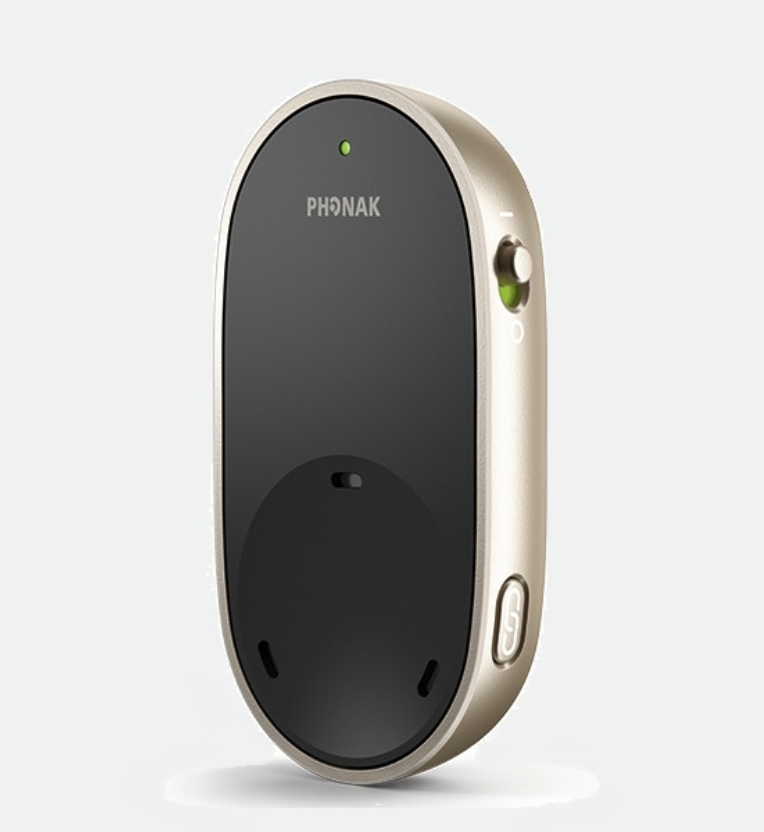
The PartnerMic is a small wireless microphone that streams the speaker's voice directly into Phonak's hearing aids, boosting it above background noise. For hearing loss parents, that means your voice cuts through a noisy restaurant, a windy playground, or a crowded family party in a way it simply can't without it. While the PartnerMic is a great entry point to remote microphone tech than a full FM system like the Roger ON (and at a significantly lower price) it's a simpler tool without the technical sophistication of a dedicated FM mic.
We used ours on a near-daily basis for about a year with our daughter's Phonak Sky Marvel hearing aids. Here's what we learned.
What the PartnerMic Actually Does
This tiny, rechargeable wireless Bluetooth microphone is an indispensable part of our LSL routine!
With the flip of a switch, you can stream speech to hearing aids to "boost" the speaker's voice.
The mic doesn't "cut out" other background sounds, but rather increases the volume of the speaker's voice. When we listened to it through our daughter's hearing aids, it also appears to reduce some wind noise.
While not a full-fledged "FM System" (there are many options in that category—including the Phonak Roger line of products) it's relatively affordable ($300-400 new, around $100 used), portable, and easy-to-use. Compare this to the cost of a Roger ON iN, generally costing between $1,300 and $2,300.
Setup was a breeze: we "paired" the mic to our daughter's Phonak Sky Marvel 70 SP BTE hearing aids within a few minutes guided by the microphone's instruction manual. Since pairing the mic a few months ago, we haven't had to redo the pairing—despite various programming updates to our daughter's hearing aids by her audiologists.
We consider this mini mic one of many "silver linings" hearing loss and the LSL life offer our daughter.
The mic charges via its included USB cord. We tend to use the mic for hours on end, and like to put it on the charger when we get home so it's always ready to go.
To use the mic, you simply flip the switch on while near the hearing aids. Phonak's user manual claims an 80 foot range! We haven't tested that out yet, since our daughter is just 11 months old, but we'll be excited to once she starts running around the playground!
Update: Our baby grew up quite a bit since this writing, and we’re happy to report her remote mic has been super helpful at the playground. Need some ideas? Check out our article on playground tips for toddlers with hearing loss.
Where It Makes The Biggest Difference
Here are some ideas for how you can start using it with your child today:
- Restaurants
We love to sit the mic on the table so our daughter can better hear our dinner conversation.
- Stroller
We live in NYC, so our baby stroller often gets hours of daily use. The mini mic helps us communicate with the baby while we push the stroller.
- Nature Walks
We love to use the mini mic while walking around trees and plants in the park. With the baby in the stroller, one of us can walk around and behind trees and narrate that activity for the baby.
- Family events
We've used the mini mic at family parties and gatherings to boost the speaker's voice in rooms of noisy parents and children.
- Doctor office, hospitals
We use the mini mic in hallways, elevators, waiting rooms, and other noisy areas.
- Cooking in apartment
Our apartment has a galley kitchen, so the mini mic helps us narrate cooking while the baby sits outside the kitchen in her high chair watching.
- Travel - cars, airports
We haven't traveled with the baby in a plane yet, but we regularly use the mini mic while riding in a car with the baby.
- Playground
We use while talking about play, weather, nature, noises and more—read more here!
While we love this product, there are a few downsides: Using the mic consumes additional hearing aid battery life. The first week we used the mic our daughter's hearing aids ran out of battery life unexpectedly! You'll want to stock up on batteries or recharge more often. It's also a bit cumbersome to attach the mic to your shirt or jacket. While it comes with a clip on the back and a lanyard, we wish there were a loop or bracket on the mic to fasten it more securely.
Check compatibility with your hearing aids first. The PartnerMic is designed for Phonak hearing aids. Ask your audiologist whether your child's devices will work with it before purchasing.
Is The Phonak PartnerMic Worth It?
Our answer: an enthusiastic yes. Our mic came included with our daughter's hearing aids, but we would have happily paid for it. The PartnerMic got us hooked on remote microphones: when we eventually upgraded to a Roger ON (a proper FM system), we already understood how and where remote mics make the biggest difference.
More importantly, the PartnerMic gave our daughter increased access to language during her first year, a critical window for language development. That said, once we started using a full FM system, the difference became clear. If your family has access to a proper FM system through Early Intervention, insurance, or your audiologist, it's worth discussing that option as soon as possible. The PartnerMic is a solid starting point. A dedicated FM system is the more effective, technically advanced choice.


